
By exposing children to other languages at an early age, we provide them with an opportunity to tap into their natural ability to hear and distinguish the sounds of other languages and also enhance their capacity to make sense of what they are hearing.
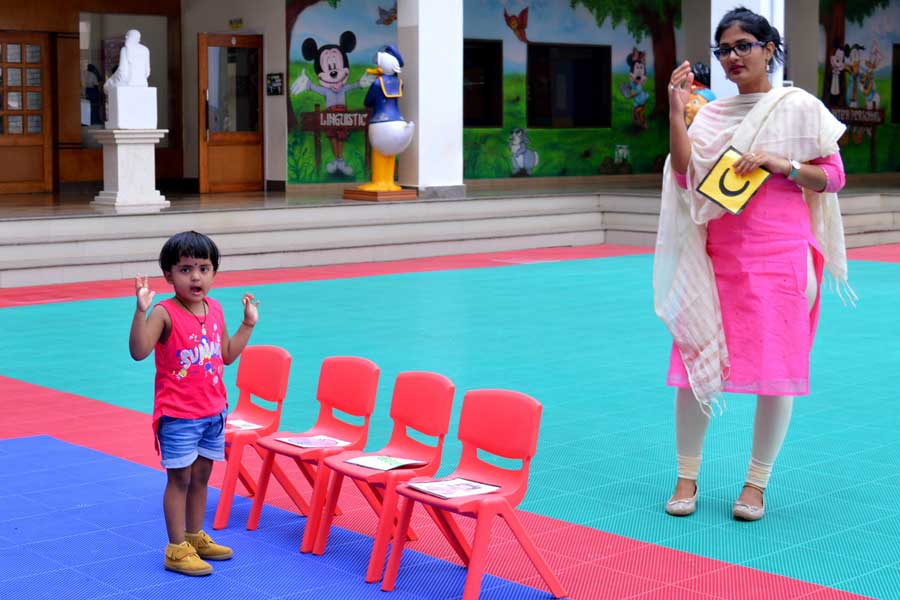
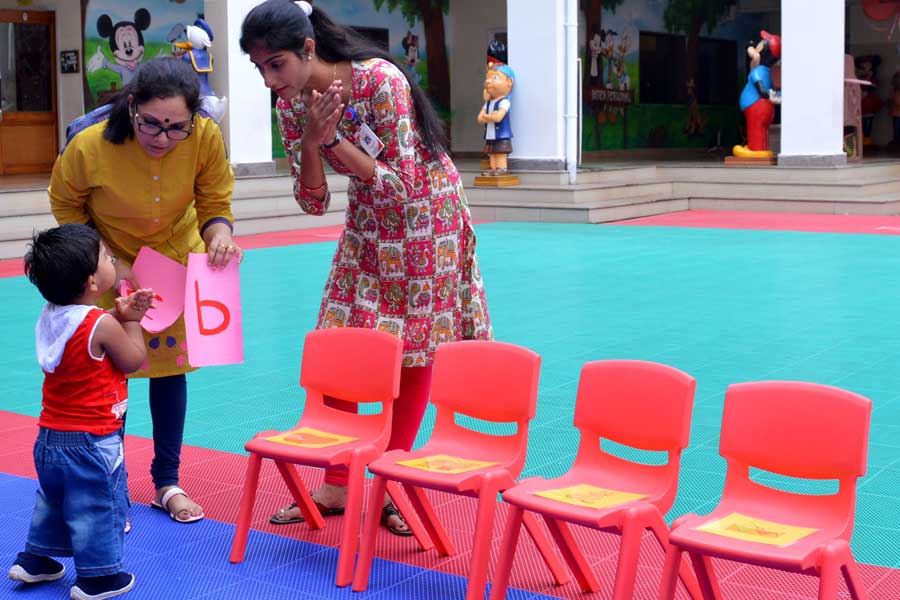
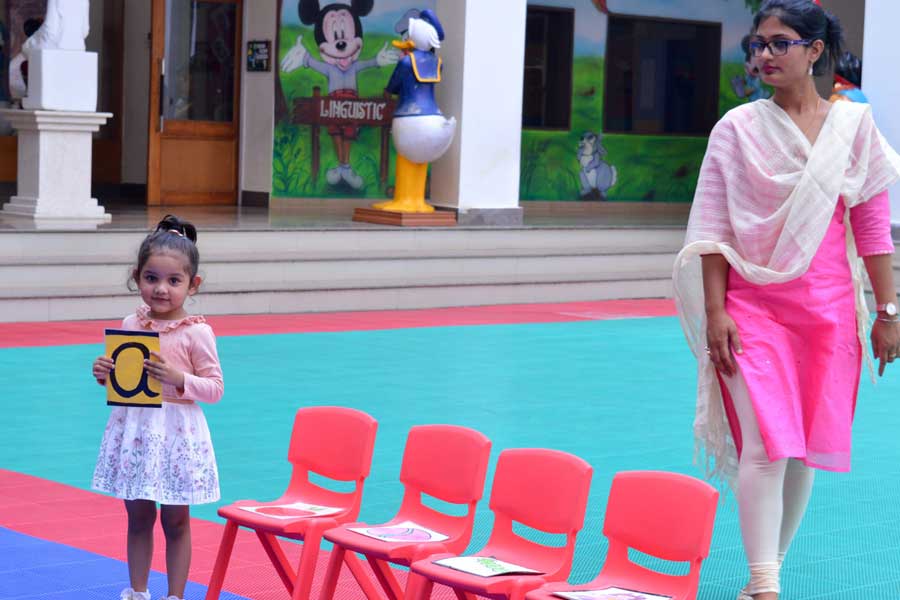
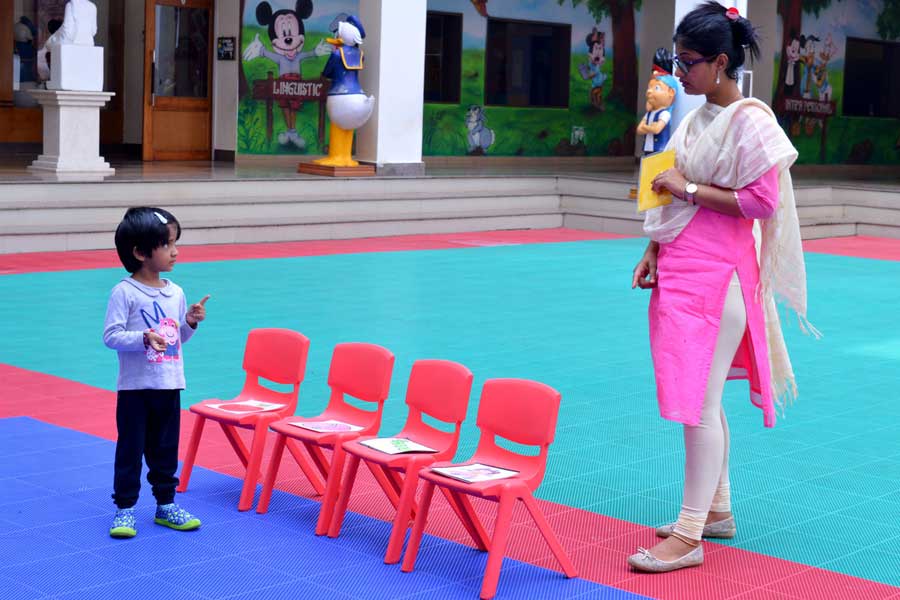
English language has a complicated spelling system, so it is important to teach letter sound in a systematic way. Phonics instruction teaches children how to decode letters into their respective sounds, a skill that is essential for them to read unfamiliar words by themselves. Phonics is important not only because this knowledge allow children to read on their own, but it is also a learning mechanism that built up a good print word dictionary that can be quickly accessed. Keeping these things in view, an activity named “Fun with Sounds” was organised for students of Play Group.
In this activity the little ones were given a sound and asked to do the action and pick an appropriate flash card. Children carried on the activity very carefully. Such activities help to enhance their gross motor and linguistic skills.
SAI Angan - Fun with Sounds